Calorie Counting Without Burnout: A Sustainable Guide
How to track calories without burning out: why self-monitoring works, why people quit, and evidence-based ways to make it stick long term.
By Tony Dalton · Updated
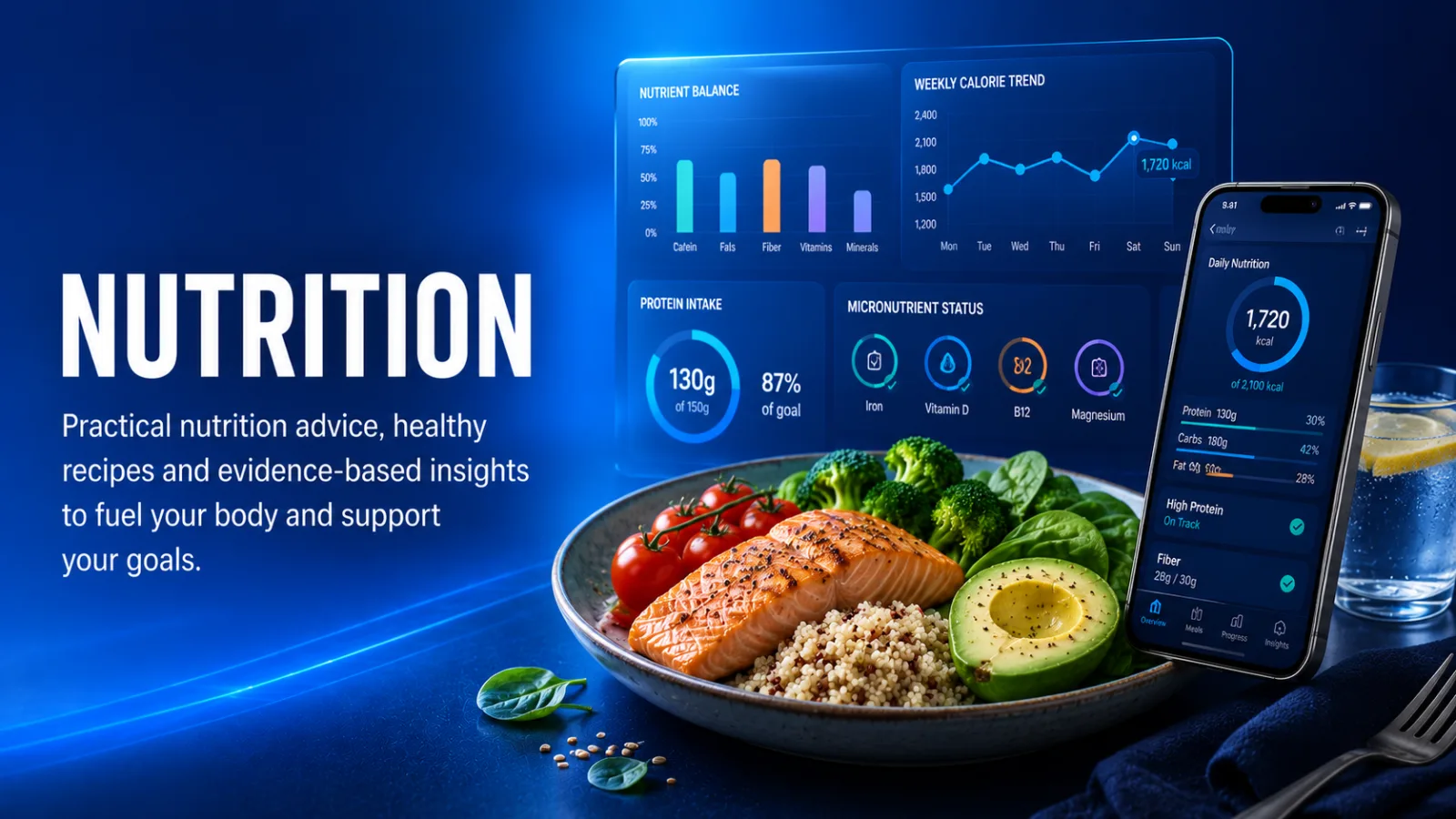
Most people who start counting calories don't stop because it fails. They stop because it becomes a chore. The first week feels organised and motivating, and then a busy day breaks the streak, a guessed meal feels like cheating, and the whole thing quietly gets abandoned.
That's a shame, because tracking what you eat is one of the better-evidenced habits in weight management. The trick isn't more discipline. It's a lighter, more forgiving way of doing it that you can keep up for months rather than weeks.
This is a practical guide to calorie counting without the burnout: what the research supports, why people quit, and how to build a routine that survives real life. It isn't medical advice, and tracking isn't right for everyone (more on that below).
Does tracking actually work?
Self-monitoring, the simple practice of recording what you eat and weighing yourself, is one of the most consistent predictors of weight-loss success in the research literature.
A systematic review by Burke and colleagues looked at studies on dietary self-monitoring, self-weighing and exercise logging. The authors found a consistent positive association between self-monitoring and weight loss, though they were careful to note the overall evidence was limited by study design and reliance on self-reported data. In plain terms: people who keep track tend to do better, even if no single study proves it on its own.
One widely cited Kaiser Permanente study found that people who kept a daily food record lost about twice as much weight as those who kept none. The NHS recommends keeping a food diary for exactly this reason, describing it as a way to see where your calories are actually going.
Why does it help? Mostly awareness. Writing things down closes the gap between what we think we eat and what we actually eat, and that gap is usually wider than we'd like to admit.
Why people quit
If tracking works, why do so many people stop? Three reasons come up again and again.
The burden. Logging every bite, weighing every portion and decoding every label takes effort. When that effort outweighs the perceived benefit, people drift away.
Perfectionism. Many treat tracking as all-or-nothing. A meal they can't measure precisely feels like a failure, so they skip it, and one missed entry becomes a missed day, then a missed week.
The numbers feel punishing. Daily targets and weight readings bounce around for reasons that have nothing to do with fat loss, and reacting to every fluctuation is exhausting.
None of these is a discipline problem. They're design problems, and you can design around them.
Consistency beats precision
The most useful mindset shift is this: a roughly accurate log you keep for six months beats a perfect log you keep for three weeks.
You don't need to capture every calorie to benefit. The value comes from the habit and the awareness, not from decimal-point accuracy. Guess a restaurant meal and move on, and you've still learned more than if you'd skipped it out of frustration. A few principles make consistency easier:
- Log honestly, not perfectly. An honest estimate beats a skipped entry every time.
- Keep the easy days easy. If most of your meals repeat, save and reuse them so logging takes seconds.
- Don't let one miss end the streak. A blank afternoon isn't a reason to abandon the day.
Anchor meals and pre-logging
Two simple tactics do a lot of the heavy lifting.
Anchor meals. Build your routine around a handful of regular meals you know and trust. If breakfast and lunch are familiar and consistent, they take almost no effort to record, which frees up your attention for the meals that genuinely vary. Snacks and extras can be approximated without much loss of accuracy.
Pre-logging. Logging a meal before you eat it, or even planning the day in advance, turns tracking from a record of regret into a tool for decisions. It's far easier to adjust a plan on the page than to wish you'd eaten differently after the fact.
It also helps to lean on foods that keep you full for the calories. Protein tends to be more satiating than carbohydrate or fat, and Mayo Clinic notes that higher-protein meals help people feel fuller and can support weight loss. Pairing protein with fibre-rich foods, such as vegetables, beans and wholegrains, makes a calorie target easier to live with, because you're less hungry while you do it.
How accurate is calorie counting really?
Here's the honest part. All calorie tracking is an approximation. Food labels carry built-in tolerances, portions are hard to eyeball, and our own estimates are biased. The British Dietetic Association's portion guidance leans on hand-based comparisons, a deck of cards for meat, a clenched fist for fruit, precisely because exact weighing isn't practical most of the time.
The bias runs in a predictable direction: we tend to under-record. In a well-known study, Lichtman and colleagues measured what a group of people who struggled to lose weight actually ate versus what they reported. On average, participants under-reported their intake by roughly half and overestimated how much they exercised. The point isn't that people lie. It's that honest self-reports are systematically optimistic.
So don't treat your daily total as a precise number. Treat it as a useful, consistent estimate. The figure matters less than whether it's trending the way you want, and whether you're logging the same way week to week so the comparison stays fair.
Track the trend, not the day
Daily weight is noisy. Water, salt, carbohydrates, hormones and a full or empty gut can swing the scale by a kilo or more overnight, none of it fat. If you react to every reading, you'll feel like you're failing on days you're actually doing fine.
The fix is to watch the trend rather than the data point. A weight that wobbles up and down but drifts gradually lower over several weeks is exactly what success looks like. This is where smoothing tools help: rather than staring at one morning's number, you follow the moving average.
This is part of what Weightlytic is built around. Fast photo-based food logging is designed to lower the friction of recording meals, so a busy day is less likely to break your streak, while the weight-trend forecasting keeps your attention on the direction of travel rather than the daily noise. The tools don't do the work for you, but they make the sustainable version of tracking easier to keep up.
An optional strategy: diet breaks
You may have heard that planned breaks from a calorie deficit help. The evidence here is genuinely interesting but more modest than the headlines suggest.
The MATADOR study compared a continuous diet with an intermittent one, where two-week periods of eating at maintenance were alternated with two-week periods of restriction. The intermittent group lost more weight and regained less afterwards, which hints that scheduled breaks may reduce the metabolic slowdown that comes with prolonged dieting.
That's promising, but it's one study in a specific group of men with obesity, and it isn't established best practice. Treat diet breaks as an optional tool to test, not a rule. For many people, simply not dieting harder than they can sustain achieves much the same thing.
A note on disordered eating
Calorie tracking isn't right for everyone. For some people, logging tips over into preoccupation, rigid food rules or anxiety, and tracking apps can make this worse rather than better. Eating-disorder charities have repeatedly flagged this risk.
If you have a history of an eating disorder, or you notice tracking is increasing anxiety, fixation or guilt around food, please step back and speak to a GP or a registered dietitian. There are effective ways to manage weight that don't involve counting anything, and your wellbeing comes first.
Frequently asked questions
Do I have to count calories forever?
No. The NHS frames tracking as a temporary learning tool rather than a permanent habit. Many people log closely for a while to build awareness of portions and patterns, then track more loosely, or stop, once those habits feel automatic.
Is it bad if my logging isn't perfectly accurate?
Not at all. Every method of calorie counting is an estimate, and research suggests most people under-record without realising it. What matters is consistency: logging the same way over time so you can see genuine trends.
How often should I weigh myself?
That's personal, but the key is to focus on the trend rather than any single reading. Daily weight fluctuates for reasons unrelated to fat loss, so a smoothed average over weeks is far more informative, and less stressful, than a one-off number.
What should I focus on if I want a calorie target to feel easier?
Prioritise protein and fibre. Higher-protein meals tend to be more filling, and pairing them with fibre-rich vegetables, pulses and wholegrains helps you stay satisfied on fewer calories, which makes the whole thing more sustainable.
Are diet breaks worth trying?
They're an optional strategy, not a requirement. The MATADOR study suggested scheduled breaks at maintenance may help some people, but the evidence is limited. If continuous dieting feels unsustainable, a planned break is a reasonable thing to experiment with.
I tend to give up after a few weeks. What's the one change to make?
Stop aiming for perfect. Build your day around a few familiar anchor meals, log honestly even when you're guessing, and refuse to let one missed entry end the day. Consistency, not precision, is what actually moves the needle.
Conclusion
Calorie counting works best when it's light enough to keep doing. The evidence points the same way every time: self-monitoring helps, but only if you sustain it. So lower the friction. Lean on anchor meals and pre-logging, choose filling protein and fibre, accept that every estimate is approximate, and judge progress by the trend rather than any single day.
Done this way, tracking stops being a test you can fail and becomes a quiet feedback loop you can live with. And if it ever starts harming your relationship with food, that's the moment to stop and get proper support.
Sources & references
- Burke LE, Wang J, Sevick MA. Self-monitoring in weight loss: a systematic review of the literature. J Am Diet Assoc, 2011 (PubMed)
- Hollis JF, et al. Weight loss during the intensive intervention phase of the Weight Loss Maintenance trial. Am J Prev Med, 2008 (PubMed)
- NHS Better Health. Calories and weight loss / calorie counting
- Lichtman SW, et al. Discrepancy between self-reported and actual caloric intake and exercise in obese subjects. N Engl J Med, 1992 (PubMed)
- British Dietetic Association. Food Fact Sheet: Portion sizes
- Mayo Clinic Diet. Higher Protein Meal Plan
- Byrne NM, et al. Intermittent energy restriction improves weight loss efficiency in obese men: the MATADOR study. Int J Obes, 2018 (PubMed)
Related articles
Track your weight loss with WeightLytic.
AI forecasting, GLP-1 companion, and protein tracking — all in one app. Free on iPhone and Android.