How GLP-1 Medications Work, Explained Simply
A plain-English guide to how GLP-1 receptor agonists like Ozempic, Wegovy and Mounjaro work, what makes the dual-agonist tirzepatide different, and what they're licensed to treat in the UK.
By Tony Dalton · Updated
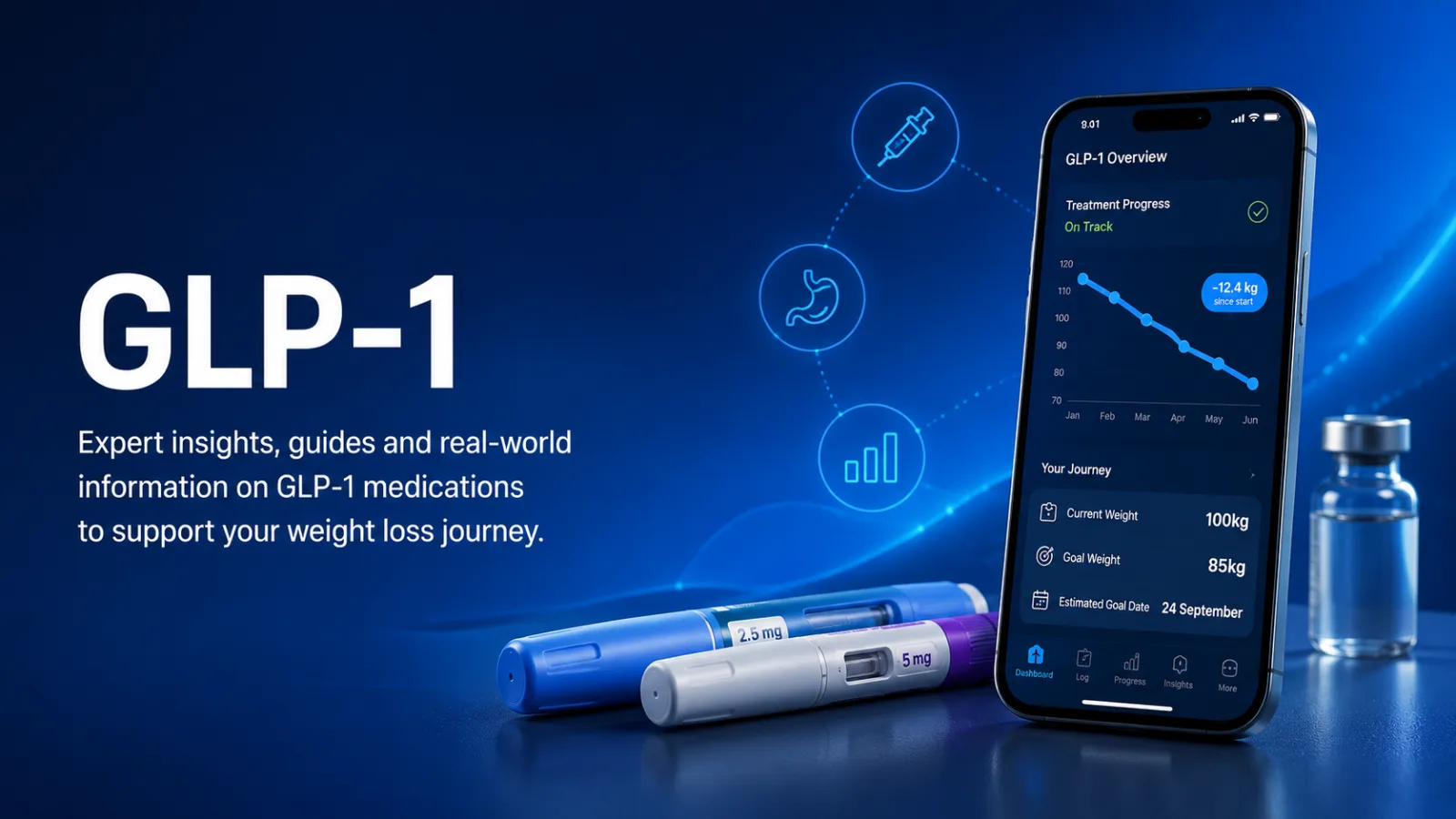
You've probably heard the names by now: Ozempic, Wegovy, Mounjaro. They turn up in news headlines and group chats, usually wrapped in a lot of hype and not much explanation. The medicines behind those brand names are GLP-1 receptor agonists, and the way they work is genuinely clever once you strip away the jargon. The short version? They borrow a trick your own gut already uses to tell your brain you've had enough to eat.
Here we'll walk through what GLP-1 actually is, what these medicines do inside the body, how the newer dual-agonist tirzepatide differs, and what they're licensed to treat in the UK. None of this is medical advice. These are prescription-only medicines, and the decisions about whether they're right for you, and at what dose, belong with a doctor.
What GLP-1 is in the first place
GLP-1 stands for glucagon-like peptide-1. It's a hormone your gut releases after you eat, and it belongs to a small family of hormones called incretins. The other main incretin is GIP (glucose-dependent insulinotropic polypeptide), and we'll come back to that one shortly because it matters for tirzepatide.
The incretin system is basically your body's post-meal messaging service. When food arrives in your intestine, cells there send out GLP-1 and GIP, which travel around and quietly coordinate a few things at once: how much insulin your pancreas releases, how fast your stomach empties, and how hungry you feel. It all happens in the background, and you never notice it.
The catch with natural GLP-1 is that it doesn't hang around. Your body breaks it down within minutes. The medicines were designed to get past that, copying the hormone's shape closely enough to switch on the same receptors, but staying active for far longer, which is why most of them are a once-weekly injection rather than something you'd need several times a day.
How GLP-1 receptor agonists actually work
"Receptor agonist" sounds technical, but it just means a substance that activates a receptor, the same way a key turns a lock. These drugs fit the GLP-1 lock and switch it on. From there, several things happen, and it's the combination that drives the effect on appetite and blood sugar.
They slow your stomach down
GLP-1 slows gastric emptying, the rate at which food leaves your stomach and moves into the intestine. With these medicines, food sits in the stomach a little longer, so you feel full sooner during a meal and stay full for longer afterwards. That's a big part of why people on them tend to eat less without white-knuckling through hunger all day. It's also, incidentally, behind some of the nausea people report early on, because the system is adjusting to a slower pace.
They turn down appetite in the brain
GLP-1 receptors sit in parts of the brain that regulate hunger, including the hypothalamus. When the medicine activates them, the signals that drive appetite get quieter. Many people describe it as the constant background chatter about food, sometimes called "food noise", simply fading. You think about snacks less, and portions that once felt normal start to feel like plenty.
They help manage blood sugar
This is where the "glucose-dependent" part earns its keep. GLP-1 prompts the pancreas to release more insulin, but mainly when blood sugar is high, which is why these drugs carry a lower risk of dropping blood sugar too far on their own than some older diabetes medicines. At the same time, GLP-1 reduces glucagon, the hormone that tells the liver to release stored sugar. Less glucagon means less sugar pushed into the bloodstream between meals. Together, these steady out blood glucose, which is the original reason GLP-1 drugs were developed for type 2 diabetes.
Pure GLP-1 agonists vs the dual-agonist tirzepatide
Not every drug in this conversation works on the same target. It's worth separating them out.
The pure GLP-1 agonists
Semaglutide and liraglutide act on the GLP-1 receptor alone. Semaglutide is the active ingredient in Ozempic and Rybelsus (licensed for type 2 diabetes) and Wegovy (licensed for weight management). Semaglutide is long-acting enough for a once-weekly injection, with Rybelsus being a daily tablet version. If you want a closer look at how the diabetes and weight-loss versions of semaglutide compare, we cover that in Ozempic vs Wegovy.
Liraglutide is the older cousin, an earlier GLP-1 agonist that's injected once a day rather than weekly. It's the active ingredient in Victoza (for type 2 diabetes) and Saxenda (for weight management). Same basic mechanism, shorter duration, which is why it needs daily dosing.
The dual GIP/GLP-1 agonist
Tirzepatide, sold as Mounjaro and Zepbound, is the newer arrival and works differently. Instead of hitting GLP-1 alone, it activates two incretin receptors at once: GLP-1 and GIP. That's why it's described as a dual agonist. Adding GIP into the mix appears to amplify the effects on appetite and blood sugar, and in head-to-head studies tirzepatide has generally produced greater weight loss than semaglutide, though it comes with its own side-effect profile. If you're curious how a course of it tends to unfold, we go through it in Mounjaro week by week.
The key takeaway is simple: pure GLP-1 agonists pull one lever, tirzepatide pulls two. Both pathways funnel toward the same outcome, eating less and steadier blood sugar, but they get there by slightly different routes.
What they're licensed for in the UK
These medicines have two distinct jobs, and which licence applies depends on the brand. Several are approved for type 2 diabetes, where they help control blood sugar. Others are approved for weight management in adults who meet specific criteria, usually a BMI threshold combined with at least one weight-related health condition such as high blood pressure or type 2 diabetes.
In England, NICE has recommended both semaglutide (as Wegovy) and tirzepatide for managing overweight and obesity within defined eligibility limits, and crucially, alongside a reduced-calorie diet and increased physical activity, not as a replacement for them. The MHRA licensed tirzepatide for weight management in adults aged 18 and over in late 2023. Eligibility is assessed by a clinician, and for some people that means going through a specialist weight-management service rather than a quick GP appointment.
One thing every official source agrees on: these medicines work with diet and activity, not instead of them. The prescription is a tool, not a substitute for the habits underneath it.
That matters more than it might sound. The medicine makes eating less feel achievable, but the food choices you make in that quieter, less-hungry headspace still shape the result. Protein in particular tends to come up a lot, partly because it helps protect muscle while you lose weight; we get into that in high-protein eating on GLP-1 medications.
These are real medicines, with real side effects
It's easy to talk about mechanism and forget that we're describing prescription drugs. The same slowed digestion that curbs your appetite is also why nausea, constipation and other gut symptoms are common, especially in the first weeks and after each dose increase. Most settle as the body adjusts, and doses are usually started low and stepped up slowly for exactly that reason. There are also less common but more serious risks that a prescriber will screen for and monitor.
We won't try to cover all of that here. If you're weighing up a GLP-1 medicine or already taking one, the practical side, what to expect and how to handle it, is worth reading properly in managing GLP-1 side effects. And anything about your specific dose, your other medications, or whether to start or stop, is a conversation for your doctor, not a blog.
Frequently asked questions
Do GLP-1 medications work without changing my diet?
They reduce appetite and help you feel full sooner, which makes eating less easier, but they're licensed to be used alongside a reduced-calorie diet and more physical activity, not on their own. The food choices you make while your appetite is quieter still shape your results, and protecting muscle and getting enough nutrition matters throughout.
What's the difference between Ozempic, Wegovy and Mounjaro?
Ozempic and Wegovy are both semaglutide, a pure GLP-1 agonist; Ozempic is licensed for type 2 diabetes and Wegovy for weight management. Mounjaro is tirzepatide, a dual GIP/GLP-1 agonist that activates two receptors rather than one. They're related but not identical, which is why their effects and side effects differ.
Are these medicines available over the counter?
No. Semaglutide, tirzepatide and liraglutide are all prescription-only medicines in the UK. They require a clinician's assessment, and for weight management there are specific eligibility criteria around BMI and related health conditions. Buying them from unregulated sources is genuinely risky.
How do they actually reduce hunger?
Two main ways working together: they slow how quickly your stomach empties, so you feel full for longer after eating, and they activate appetite-regulating receptors in the brain, turning down the signals that drive hunger and cravings. Many people describe a noticeable drop in constant thoughts about food.
Is tirzepatide better than semaglutide?
In direct comparison studies, tirzepatide has generally produced greater average weight loss, likely because it activates both the GIP and GLP-1 receptors rather than GLP-1 alone. But "better" depends on the individual, their health, tolerance of side effects and what a clinician judges appropriate. That's a decision to make with a prescriber, not from a league table.
Where WeightLytic fits in
Understanding the mechanism is one thing; living with it day to day is another. WeightLytic is a companion for exactly that stretch — AI food tracking to keep your nutrition on track while your appetite is lower, a place to log your medication and dose, and weight-trend forecasting that shows where your progress is likely heading as a confidence range rather than a single optimistic line.
We built WeightLytic carefully and honestly rather than over-promising. If a GLP-1 companion that takes the mechanism seriously sounds useful, it is available now on the App Store and Google Play — free to download. And if you are thinking about what comes after a course ends, life after GLP-1 is worth a read too.
Sources & references
- NHS — Semaglutide (Ozempic, Wegovy, Rybelsus): how it works and uses
- Diabetes UK — Liraglutide: uses, how it works and side effects
- NICE TA1026 — Tirzepatide for managing overweight and obesity: recommendations
- NICE TA875 — Semaglutide for managing overweight and obesity: recommendations
- FDA — Mounjaro (tirzepatide) prescribing information
- Endocrinology Advisor — How do GLP-1 receptor agonists work?
- Tirzepatide versus semaglutide for weight loss: a systematic review and meta-analysis (PMC)
- NHS England — Weight management injections
Related articles
Track your weight loss with WeightLytic.
AI forecasting, GLP-1 companion, and protein tracking — all in one app. Free on iPhone and Android.