Ozempic vs Wegovy: What's the Difference?
Ozempic and Wegovy are both semaglutide, but they're licensed for different uses and reach different maximum doses. A plain-English comparison.
By Tony Dalton · Updated
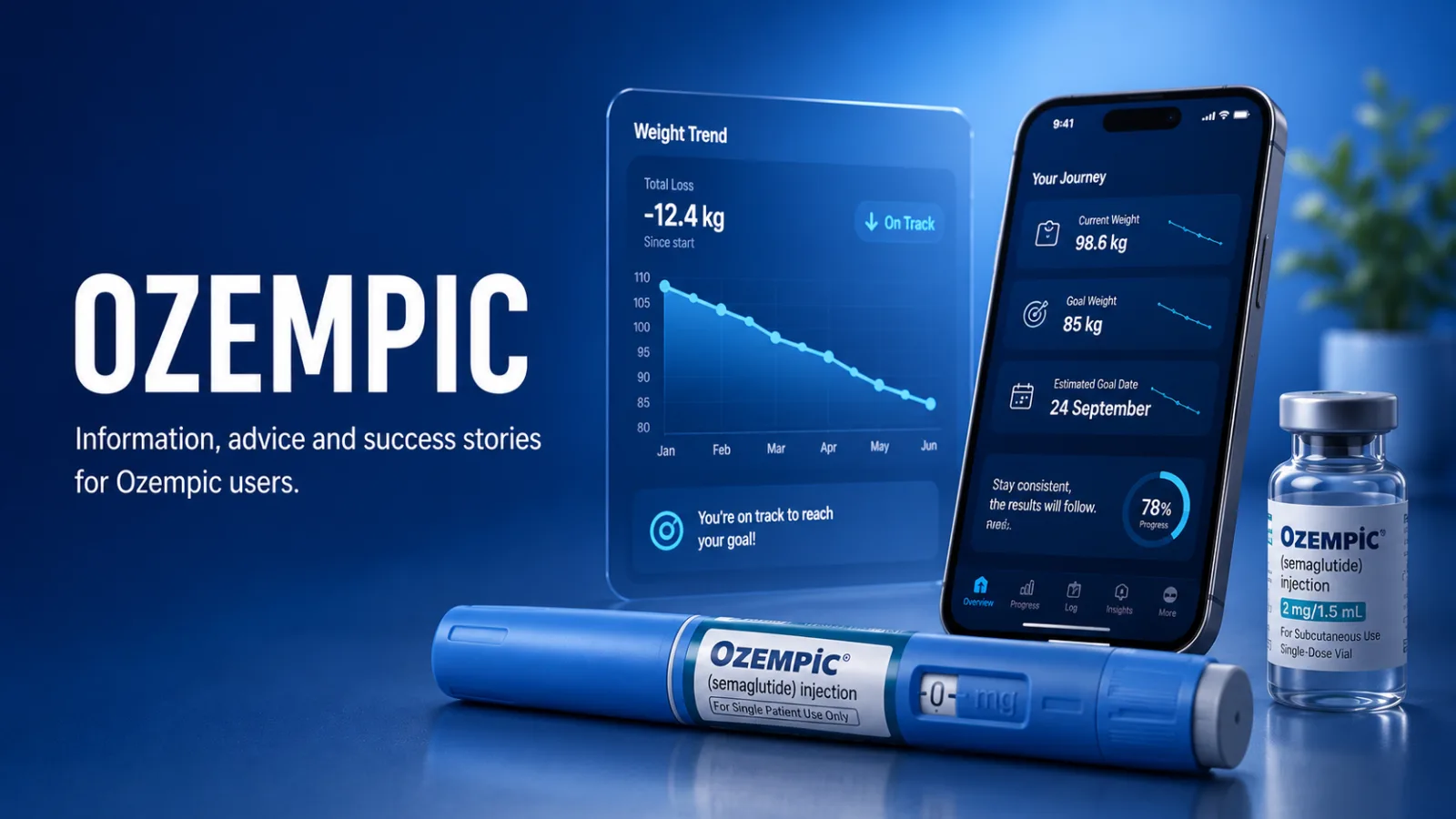
If you've started reading about weight-loss injections, you'll have seen Ozempic and Wegovy mentioned in the same breath, often as if they were rivals. Here's the part that surprises people: they contain the same active ingredient. Both are semaglutide, made by the same company (Novo Nordisk).
So "Ozempic vs Wegovy" isn't really a contest between two different drugs. It's a question about licensed use and dose. One is approved to treat type 2 diabetes; the other is approved for weight management and goes to a higher maximum dose. That distinction shapes who can be prescribed which, how much weight loss to expect, and how you'd access either one.
This guide walks through the differences in plain English. It isn't medical advice and can't tell you which product is right for you — only a prescriber can do that, after looking at your health history, your goals and what's actually available.
The same drug, different products
Semaglutide is a GLP-1 receptor agonist. It mimics a hormone your gut releases after eating: it slows how quickly your stomach empties, helps regulate blood sugar, and acts on appetite signals in the brain so you feel fuller and less hungry.
Novo Nordisk sells semaglutide under three brand names, each licensed for different purposes:
- Ozempic — a once-weekly injection licensed for type 2 diabetes.
- Wegovy — a once-weekly injection licensed for chronic weight management.
- Rybelsus — an oral tablet (taken daily) licensed for type 2 diabetes.
According to a review of semaglutide published by the US National Library of Medicine (StatPearls), it is "approved by the US Food and Drug Administration (FDA) as 3 separate brand name medications — Ozempic, Wegovy, and Rybelsus", with Rybelsus and Ozempic indicated for diabetes (Ozempic also for cardiovascular protection) and Wegovy for weight management.
The molecule is the same. What changes between the brands is the licensed indication and the dose the product is built to deliver.
Indications: what each is licensed for
Ozempic
Ozempic's FDA-approved indication is to improve blood sugar control in adults with type 2 diabetes, alongside diet and exercise. It is also approved to reduce the risk of major cardiovascular events (such as heart attack and stroke) in adults who have both type 2 diabetes and established heart disease.
Notice what isn't there: weight loss is not a licensed indication for Ozempic. People do lose weight on it, because that's what semaglutide does, but reducing weight in people without diabetes is not what the product is approved for.
Wegovy
Wegovy is licensed for chronic weight management. It's approved for adults with obesity, or with overweight plus a weight-related health condition (such as high blood pressure or type 2 diabetes), used together with a reduced-calorie diet and increased physical activity. In other words, Wegovy is the product specifically designed and licensed for weight loss.
This licensing difference matters in practice. In the UK, the NHS makes the same distinction: Ozempic is available on the NHS for type 2 diabetes, while semaglutide for weight loss is provided as Wegovy through specialist weight-management services, in line with NICE guidance. You generally can't get Ozempic on the NHS off-label simply to lose weight.
Doses compared
Both injections are given once a week, under the skin (subcutaneously), using a pre-filled pen. The big practical difference is the dose each is built to reach.
Ozempic dosing
Ozempic is started at 0.25 mg once weekly for four weeks (a starter dose that isn't really therapeutic, just there to let your body adjust). It then increases to 0.5 mg, and can be raised to 1 mg and, if needed, to a maximum of 2 mg once weekly. The 2 mg maximum was a later addition for people whose blood sugar isn't yet controlled on 1 mg.
Wegovy dosing
Wegovy uses a longer step-up schedule, climbing higher. The usual escalation is 0.25 mg, then 0.5 mg, 1 mg, 1.7 mg, and finally the maintenance dose of 2.4 mg once weekly, with each step lasting about four weeks, so it takes roughly 16 weeks to reach the full maintenance dose. (A higher-dose Wegovy option has more recently been approved in the US for some patients who tolerate 2.4 mg, but 2.4 mg remains the standard maintenance dose for weight management.)
So the headline is simple. Same molecule; Wegovy is licensed to go higher (up to 2.4 mg) than Ozempic (up to 2 mg). The slow titration on both isn't bureaucratic caution. It's there to reduce the gut side effects that are most common when the dose first goes up.
How much weight loss to expect
The clearest weight-loss evidence comes from the STEP programme, which tested semaglutide 2.4 mg (the Wegovy dose) specifically for weight management.
In the STEP 1 trial, published in the New England Journal of Medicine, 1,961 adults with overweight or obesity (without diabetes) were randomly assigned to semaglutide 2.4 mg weekly or placebo, both alongside lifestyle support, for 68 weeks. The mean change in body weight was −14.9% with semaglutide versus −2.4% with placebo. Put plainly, the average participant on the active drug lost close to 15% of their body weight over about 16 months — far more than lifestyle changes alone.
For Ozempic, the relevant trials are the SUSTAIN programme, which studied semaglutide for blood-sugar control in type 2 diabetes (at lower doses, up to 1 mg in those trials). Weight loss was a secondary finding, not the main goal. In SUSTAIN 7, mean body weight fell by about 4.6 kg on semaglutide 0.5 mg and 6.5 kg on 1 mg over 40 weeks — meaningful, but smaller in absolute terms than the dedicated weight-loss results, partly because the doses were lower and the population had diabetes (where weight loss on GLP-1 drugs tends to be more modest).
The takeaway: a higher dose, in a population treated specifically for weight, generally means more weight loss on average. But "on average" hides a wide spread — some people lose a lot, some much less, and the result isn't guaranteed for anyone.
Side effects & safety
Because Ozempic and Wegovy are the same drug, they share the same side-effect and safety profile. Higher doses simply tend to bring a higher chance of side effects.
Common side effects are mostly gastrointestinal: nausea, vomiting, diarrhoea, constipation and abdominal pain. The StatPearls review notes nausea is among the most frequently reported effects and one of the most common reasons people stop. These effects often appear or worsen just after a dose increase, then tend to settle — which is exactly why the dose is raised gradually.
More serious risks to be aware of, and to discuss with a prescriber, include:
- Thyroid C-cell tumours (boxed warning). Semaglutide carries a US boxed warning because, in rodent studies, it caused dose-dependent thyroid C-cell tumours. Whether this applies to humans is uncertain, but it is contraindicated in people with a personal or family history of medullary thyroid carcinoma or MEN 2 syndrome.
- Pancreatitis. Cases of acute pancreatitis have been reported, although a definite causal link isn't established. Severe, persistent abdominal pain warrants prompt medical attention.
- Gallbladder problems. Semaglutide is associated with gallbladder and biliary issues, including gallstones (cholelithiasis) and gallbladder inflammation (cholecystitis), which can become more likely with rapid weight loss.
This is not the full safety picture. The approved prescribing information lists further cautions (kidney effects from dehydration, gallbladder symptoms, low blood sugar when combined with certain diabetes medicines, and more). Read the leaflet that comes with your pen and raise any concerns with your prescriber.
Which might a doctor prescribe?
Because the products are licensed differently, the choice usually follows your clinical situation rather than personal preference:
- If you have type 2 diabetes and the main goal is blood-sugar control (with weight loss as a welcome bonus), Ozempic is the licensed diabetes product.
- If the main goal is weight management and you meet the criteria (obesity, or overweight with a related condition), Wegovy is the product licensed for that purpose and able to reach the higher 2.4 mg dose.
Two caveats. The products are not interchangeable — you shouldn't switch between them, or assume an equivalent dose, without a prescriber guiding it. And supply is a real-world factor: shortages have affected availability at times, and access and cost vary a lot between the NHS, private prescriptions and different countries. What's available to you isn't always a free choice.
Rybelsus: the oral option
For completeness, there's a third semaglutide product. Rybelsus is oral semaglutide — a tablet taken once daily rather than a weekly injection. It comes in 3 mg, 7 mg and 14 mg tablets and is licensed for type 2 diabetes (with a cardiovascular risk-reduction indication added more recently for the higher strengths).
Rybelsus is not a weight-loss product and isn't a like-for-like swap for the injections. It must be taken on an empty stomach with a small sip of plain water, then nothing further by mouth for a set time, which affects absorption. Worth knowing it exists, but the "Ozempic vs Wegovy" weight-loss conversation is really about the injectables.
Where tracking fits in
Whichever product and dose you and your prescriber land on, the medication works best alongside consistent habits — and that's the part you control day to day. Keeping a simple food log makes appetite changes visible, so you can see whether you're genuinely eating less or just eating differently. Watching your weight trend over weeks (rather than reacting to a single morning's reading) gives a truer picture of progress. And paying attention to protein helps protect muscle while you lose fat, which matters more when appetite drops sharply.
This is exactly what WeightLytic is built to help with: turning food logging, your weight trend and protein intake into something you can actually see and act on, to complement whatever your prescriber recommends.
Frequently asked questions
Are Ozempic and Wegovy the same drug?
Yes, in the sense that both contain the same active ingredient, semaglutide, made by Novo Nordisk. They differ in licensed use (Ozempic for type 2 diabetes, Wegovy for weight management) and in maximum dose (2 mg for Ozempic, 2.4 mg for Wegovy).
Is Wegovy better than Ozempic for weight loss?
Wegovy is the product licensed for weight loss and reaches a higher dose, and the dedicated weight-loss trials used that 2.4 mg dose. On average, higher doses and a weight-focused population produce more weight loss. But it's the same molecule, so the difference is about dose and licensed use rather than a fundamentally different drug. Your prescriber decides what's appropriate for you.
Can I get Ozempic for weight loss instead of Wegovy?
In the UK, Ozempic is licensed and provided for type 2 diabetes, not weight loss, and isn't routinely prescribed off-label on the NHS purely to lose weight. Semaglutide for weight management is offered as Wegovy through specialist services. Never switch between the two, or change your dose, without a prescriber.
Do Ozempic and Wegovy have different side effects?
No — because it's the same drug, the side-effect profile is the same. The most common effects are gastrointestinal (nausea, vomiting, diarrhoea, constipation). Both carry the same boxed warning about thyroid C-cell tumours seen in animal studies, and the same cautions around pancreatitis and gallbladder problems. Higher doses can mean a higher chance of side effects.
How long does it take to reach the full dose?
Both are titrated slowly to limit gut side effects. Ozempic steps up over weeks toward its 1 mg or 2 mg dose. Wegovy typically takes around 16 weeks to reach its 2.4 mg maintenance dose, moving up roughly every four weeks. If a step isn't tolerated, a prescriber may hold the dose for longer.
What about Rybelsus?
Rybelsus is oral semaglutide, a daily tablet licensed for type 2 diabetes. It's the same active ingredient but a different formulation and indication, taken under specific instructions on an empty stomach. It isn't a weight-loss product and isn't interchangeable with the injections.
Conclusion
"Ozempic vs Wegovy" sounds like a face-off between two drugs, but it's really one molecule wearing two labels. Ozempic is semaglutide licensed for type 2 diabetes, up to 2 mg weekly. Wegovy is semaglutide licensed for weight management, up to 2.4 mg weekly, and it's the version the major weight-loss trials studied. They share the same mechanism, the same side effects and the same safety warnings; they differ in approved use, dose and how you access them.
The right choice isn't something to settle from an article — it depends on your health, your goals and what's available where you are, which is a conversation for a prescriber. What you can own, on any product, is the consistency around it: logging your food, watching your weight trend, and keeping protein up.
Sources & references
- Semaglutide — StatPearls, US National Library of Medicine (NCBI)
- Wilding JPH et al., Once-Weekly Semaglutide in Adults with Overweight or Obesity (STEP 1), New England Journal of Medicine
- Pratley RE et al., Semaglutide versus dulaglutide once weekly in type 2 diabetes (SUSTAIN 7), The Lancet Diabetes & Endocrinology
- Ozempic (semaglutide) injection — FDA prescribing information
- Wegovy (semaglutide) injection — FDA prescribing information
- Rybelsus (semaglutide) tablets — FDA prescribing information
Related articles
Track your weight loss with WeightLytic.
AI forecasting, GLP-1 companion, and protein tracking — all in one app. Free on iPhone and Android.