Ozempic for Weight Loss: What the Evidence Says
Ozempic is a type 2 diabetes drug, and using it to lose weight is off-label. Here is what semaglutide really does, what the STEP 1 trial showed at the Wegovy dose, and why the brand on the pen matters.
By Tony Dalton · Updated
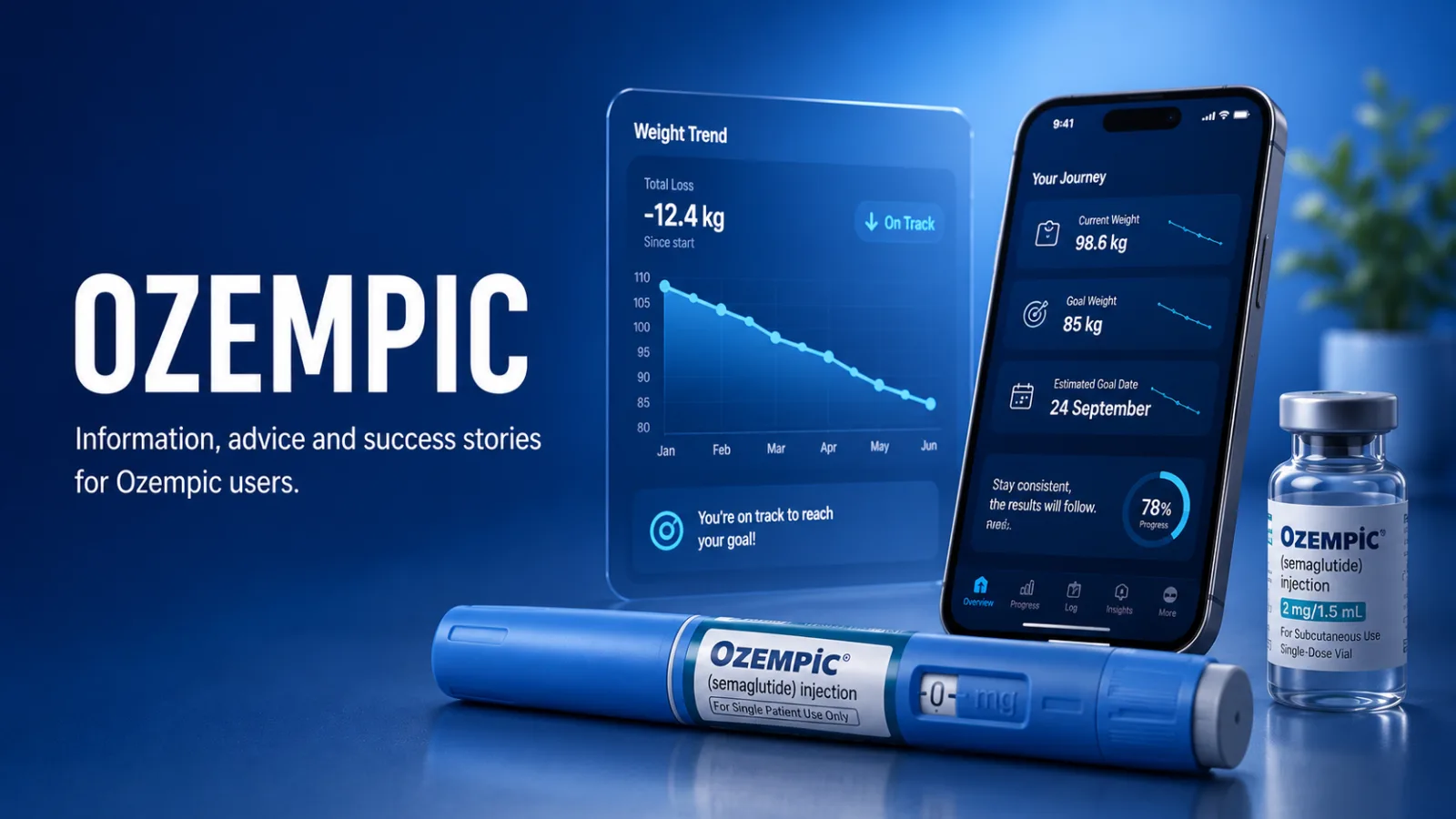
You've almost certainly seen the headlines, and maybe a relative or a colleague has mentioned it: Ozempic, the weekly injection that seems to melt the weight away. It's become shorthand for an entire category of medicine. But here's the thing most of those headlines skip over — in the UK and the US, Ozempic isn't actually a weight-loss drug. Not on paper, anyway. It's licensed to treat type 2 diabetes. Using it purely to lose weight is what doctors call "off-label", and that distinction matters more than you might think.
So what does the evidence really say? Let's walk through it honestly — what semaglutide does, what the trials measured (and at what dose), and why the brand name on the pen changes the whole picture.
Ozempic, Wegovy and the semaglutide muddle
Ozempic and Wegovy contain the same active ingredient: semaglutide. That's the source of most of the confusion. They're made by the same company, they work the same way, and they come in similar-looking pens. But they're licensed for different jobs.
- Ozempic is licensed for type 2 diabetes — and, per its FDA label, to reduce the risk of major cardiovascular events in adults with type 2 diabetes and heart disease. Its maximum dose is 2 mg once weekly.
- Wegovy is the semaglutide brand licensed specifically for weight management in adults living with obesity, or overweight with a weight-related condition. Its maintenance dose for weight loss is higher: 2.4 mg once weekly.
When someone is prescribed Ozempic to lose weight rather than to manage diabetes, that's off-label prescribing. The UK's General Pharmaceutical Council is clear that off-label prescribing is lawful and can be appropriate in the right circumstances — but it isn't the same as a regulator (the MHRA in the UK, the FDA in the US) having reviewed and approved the drug for that use. We dig into the practical differences in our guide to Ozempic vs Wegovy.
Why the dose difference matters
This is the part that gets lost. Almost every impressive "Ozempic weight loss" statistic you'll read actually comes from trials of semaglutide at 2.4 mg — the Wegovy strength — not Ozempic's 2 mg maximum. So when people cite headline weight-loss figures and attach them to Ozempic, they're quietly borrowing numbers from a higher dose of the same molecule. The effect at Ozempic's licensed doses is real, but it shouldn't be assumed to match the Wegovy trial results.
How semaglutide drives weight loss
Semaglutide is a GLP-1 receptor agonist — it mimics a gut hormone called glucagon-like peptide-1 that your body releases after eating. GLP-1 receptors sit in parts of the brain that govern hunger and fullness, including the hypothalamus and brainstem. By switching those receptors on, semaglutide turns down appetite: people tend to feel full sooner, stay satisfied for longer, and notice fewer cravings. It also slows how quickly the stomach empties, which adds to that sense of fullness.
The upshot is straightforward: you eat less, often without the white-knuckle hunger that usually scuppers a diet. It's not magic and it's not a metabolism trick — it's appetite, recalibrated. We've written a fuller explainer on how GLP-1 medications work if you want the mechanism in detail.
What the STEP 1 trial actually showed
The big evidence everyone points to is the STEP 1 trial, published in the New England Journal of Medicine in 2021. It's worth knowing exactly what it tested, because it's frequently misquoted.
STEP 1 enrolled 1,961 adults with obesity (or overweight with a weight-related condition) who did not have diabetes. They were given either semaglutide 2.4 mg weekly — again, the Wegovy dose — or a placebo, both alongside lifestyle support, for 68 weeks. The results, from the American College of Cardiology summary:
- Mean weight change was −14.9% with semaglutide versus −2.4% with placebo.
- 86.4% of people on semaglutide lost at least 5% of their body weight, compared with 31.5% on placebo.
- Average starting weight was around 105 kg (about 16.5 stone, or 232 lb), so 14.9% is roughly 15–16 kg (33–35 lb) for a typical participant.
Two honest caveats. First, those numbers describe semaglutide at 2.4 mg — not Ozempic's 2 mg ceiling — so they can't simply be relabelled as "Ozempic results". Second, that placebo group still lost a little weight, which tells you the lifestyle support in the trial mattered too. The drug wasn't working in a vacuum.
The medication reduces appetite; it doesn't decide what's on the plate. In the trials, semaglutide was always paired with diet and activity changes — and that combination is what produced the results.
Realistic expectations
Averages hide a lot of variation. In STEP 1, some people lost a great deal and others much less. A double-digit percentage drop is a genuine possibility for many, but it isn't promised to anyone, and it builds gradually over many months as the dose is titrated up — not in the first fortnight.
It also isn't a substitute for the basics. Semaglutide makes a calorie deficit easier to reach and sustain by quietening hunger, but the deficit is still doing the work — see our piece on the calorie deficit explained. Protein and resistance training matter too, because rapid weight loss can take muscle along with fat; our guide to eating enough protein on a GLP-1 covers why that's worth protecting. And there's the question of what happens when you stop — appetite tends to return, and so can some of the weight, which is its own conversation.
Supply, shortages and UK prescribing
There's a responsible reason the off-label point isn't just pedantry. When demand for semaglutide as a weight-loss aid surged, it outstripped supply — and people who needed Ozempic for their diabetes struggled to get it. In response, the UK's Department of Health and Social Care issued a national patient safety alert in May 2023 advising clinicians not to start new patients on Ozempic for weight management, reserving it for type 2 diabetes. Diabetes UK tracked these shortages closely; supply was reported to have largely recovered by the end of 2024, but the prescribing advice reflects a real clinical priority.
For weight loss specifically, the licensed route in England runs through Wegovy and, increasingly, tirzepatide (Mounjaro). NICE recommends semaglutide for managing obesity only within a specialist weight management service, typically for people with a BMI of at least 35 plus a weight-related condition (lower thresholds apply for some ethnic backgrounds), for a maximum of two years. In other words: the proper channel for losing weight on semaglutide is Wegovy under specialist care — not Ozempic on the side.
Safety and side effects
Semaglutide is generally well tolerated, but side effects are common, especially early on or when the dose increases. The most frequent are gastrointestinal: nausea, diarrhoea, constipation, vomiting and reflux. In STEP 1, 4.5% of the semaglutide group stopped treatment because of GI problems, versus 0.8% on placebo. Most people find these symptoms ease as their body adjusts, and slow dose titration helps.
There are rarer but more serious considerations — pancreatitis, gallbladder problems, and cautions in people with a personal or family history of certain thyroid cancers — which is exactly why this is a prescription-only medicine that needs a clinician's oversight. Our overview of Ozempic side effects goes through these in more depth.
This article is general information, not medical advice. Whether any GLP-1 medication is right for you — and which one, at what dose, through what service — is a decision for you and a qualified clinician. Never source these injections from unregulated sellers.
Frequently asked questions
Is Ozempic approved for weight loss?
No. In both the UK and US, Ozempic (semaglutide) is licensed to treat type 2 diabetes, not weight loss. Prescribing it to lose weight is off-label. The semaglutide brand licensed specifically for weight management is Wegovy.
Why do people lose weight on Ozempic if it's a diabetes drug?
Because the active ingredient, semaglutide, reduces appetite by acting on GLP-1 receptors in the brain and slowing stomach emptying. That effect happens whether the goal is blood-sugar control or weight loss — which is why weight loss is a well-known side effect of the diabetes medicine.
How much weight can you lose on semaglutide?
In the STEP 1 trial, adults on semaglutide 2.4 mg (the Wegovy dose) lost an average of 14.9% of their body weight over 68 weeks, alongside diet and activity changes. Results vary a lot between individuals, and that figure comes from a higher dose than Ozempic's 2 mg maximum.
Can I get Ozempic on the NHS to lose weight?
Generally no. Following the 2023 safety alert, Ozempic is reserved for people with type 2 diabetes. For weight loss, NHS access runs through specialist services using Wegovy (or, increasingly, tirzepatide), subject to NICE eligibility criteria.
Is Wegovy better than Ozempic for weight loss?
They're the same drug, but Wegovy is licensed for weight management and reaches a higher dose (2.4 mg vs 2 mg), which is the dose the weight-loss trials used. For losing weight, Wegovy is the appropriate, licensed choice — see our Ozempic vs Wegovy comparison.
Where WeightLytic fits in
WeightLytic is an AI-powered weight-loss companion for people who want to track food, follow their weight trend, and stay on top of GLP-1 medication in one place. We keep it honest — there are no member counts or accuracy claims to quote here, because we would rather earn your trust than inflate it. If you would like a calmer, evidence-led way to support your journey on or off medication, it is free to download on the App Store or Google Play. You can also see what it does on the features page.
Sources & references
- American College of Cardiology — STEP 1 trial summary (semaglutide 2.4 mg, NEJM 2021)
- New England Journal of Medicine — Once-Weekly Semaglutide in Adults with Overweight or Obesity (STEP 1)
- General Pharmaceutical Council — Weight-loss medications FAQ (off-label prescribing)
- Diabetes UK — GLP-1 RA shortages FAQ
- NICE TA875 — Semaglutide for managing overweight and obesity
- Cleveland Clinic — GLP-1 agonists: how they work and side effects
Related articles
Track your weight loss with WeightLytic.
AI forecasting, GLP-1 companion, and protein tracking — all in one app. Free on iPhone and Android.