Protein Timing: Does When You Eat It Matter?
Total daily protein matters most, but spreading it across 3-4 meals of roughly 20-40g may give a modest edge. We debunk the anabolic window, weigh up casein before bed, and explain why timing matters most on a small appetite.
By Tony Dalton · Updated
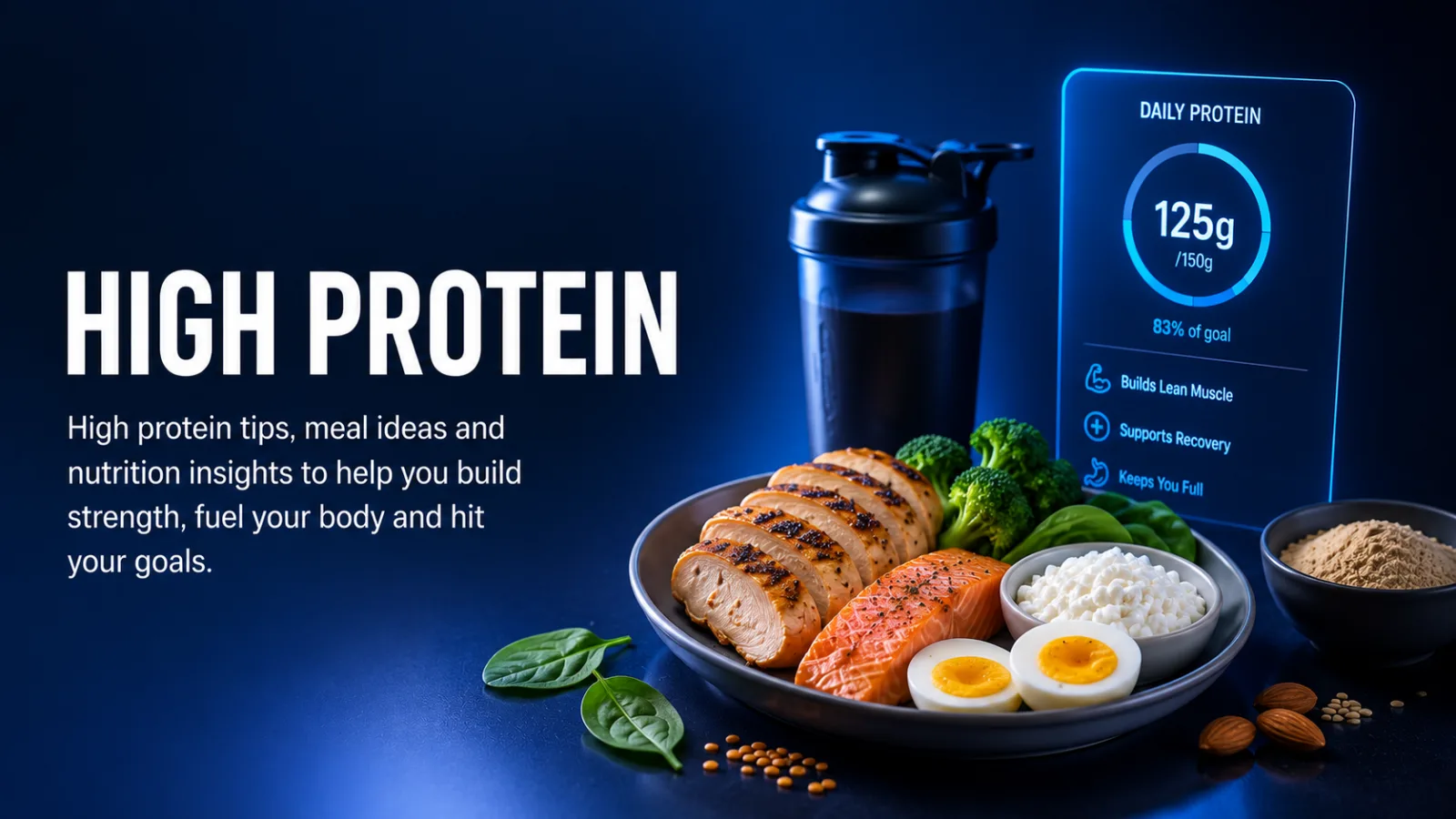
You've probably heard you need to "feed your muscles every few hours" or rush a shake down within minutes of finishing a workout, or the gains slip away. It's one of the stickiest ideas in nutrition. It's also mostly wrong. The honest version is less dramatic but a lot more freeing: hit your total protein for the day and you've done the heavy lifting. When you eat it matters far less than people think, though it isn't nothing either.
So let's separate what the evidence actually supports from gym-floor folklore, and look at where timing genuinely earns its keep, especially if your appetite is low.
Total daily protein is the main event
If there's one number to care about, it's your daily total. A large meta-analysis by Morton and colleagues, published in the British Journal of Sports Medicine in 2018, pooled 49 studies and found that protein supplementation meaningfully boosted muscle and strength gains from resistance training, with benefits plateauing at around 1.6 g/kg of body weight per day (the confidence interval stretched up towards 2.2 g/kg for people wanting a safety margin). That's the figure worth anchoring to. Eat enough across the day and the structure of those meals becomes a detail rather than a deciding factor.
The UK's British Dietetic Association lands in the same neighbourhood, putting active people at roughly 1.4–2.0 g/kg/day and around 1.6–1.7 g/kg/day where building muscle is the goal. The everyday government guideline of about 0.75 g/kg/day keeps you healthy, but it's set for the general population, not for someone training hard or trying to hold onto muscle while losing fat.
We've covered how to work out your personal number in protein targets by bodyweight, so if you haven't set one yet, start there. Everything below assumes the total is sorted.
The "anabolic window" was never that narrow
The old idea was that you had maybe 30 to 60 minutes after training to get protein in, or the session was half wasted. Aragon and Schoenfeld took this apart in their 2013 review, Nutrient timing revisited, and the conclusion was blunt: the window, if it exists at all in a meaningful way, is much wider than the supplement marketing suggested. For most people it's measured in hours, not minutes.
A couple of things drive that. Resistance training raises muscle protein synthesis for roughly 24 hours afterwards, so a single post-session shake isn't a magic switch. And if you ate a normal protein-containing meal a few hours before training, those amino acids are still circulating during and after your workout. The "fasted, must refuel instantly" scenario rarely applies to how real people eat.
None of this means post-workout protein is pointless, it just isn't the make-or-break moment it was sold as. A meal within a few hours either side of training is plenty. If you train before breakfast, having protein soon afterwards is sensible, mostly because you've gone overnight without any.
Spreading protein across meals: a modest, sensible edge
Here's where timing does pull a little weight. A few lines of evidence suggest that distributing protein fairly evenly across the day, rather than loading it all into one big dinner, may slightly favour muscle.
The mechanistic argument comes from the dose per meal. Schoenfeld and Aragon's 2018 paper in the Journal of the International Society of Sports Nutrition reviewed how much protein the body can put towards muscle-building in a single sitting. Their practical takeaway: aim for about 0.4 g/kg per meal across roughly four meals to comfortably reach 1.6 g/kg over the day. For a lot of people that works out to somewhere in the 20–40 g range per meal. Importantly, they didn't conclude that protein above ~25 g is "wasted", that old claim was overstated; extra protein in a big meal still gets used, just less efficiently for muscle specifically.
On the whole-body side, Mamerow and colleagues ran a tightly controlled feeding study in 2014, published in the Journal of Nutrition. Same total protein, same calories, but eaten either evenly (roughly 30 g at breakfast, lunch and dinner) or skewed towards dinner. The even pattern produced about 25% higher 24-hour muscle protein synthesis. That's a real finding worth knowing.
Two honest caveats, though. Muscle protein synthesis measured over a day is a short-term marker, not the same as months of measured muscle gain, and longer trials looking at actual body composition have been more mixed. So treat even distribution as a reasonable, low-cost habit that may help a bit, not a rule you've failed if you miss it. Three to four protein-containing meals is a fine target for most people.
What this looks like on a plate
- Breakfast: eggs, Greek yoghurt, or a protein-fortified porridge rather than toast and jam alone.
- Lunch: a palm-or-two of chicken, fish, tofu or beans, not just a carb-heavy sandwich.
- Dinner: usually the easy one, most people already get plenty here.
- A fourth anchor if you train or struggle to hit your total: a shake, cottage cheese, or skyr.
Our guide to the best high-protein foods has plenty of options for filling each of those slots without much effort.
Protein before bed: does casein hold up?
Pre-sleep protein is one of the more interesting timing ideas, and it has slightly better support than most. The thinking is that a slow-digesting protein, classically casein, taken before bed keeps amino acids trickling through during the overnight fast, when you'd otherwise go many hours with nothing.
Snijders and colleagues ran a 12-week study in young men doing resistance training, giving one group a casein-based drink (around 40 g) every night before bed. That group saw greater gains in muscle size and strength than the placebo group. There's a sensible review of this whole area, Pre-sleep protein ingestion to improve the skeletal muscle adaptive response to exercise training, if you want the detail.
The catch worth being honest about: in those studies the pre-sleep protein often pushed the total daily intake higher too, so some of the benefit is simply "more protein". If you're already comfortably hitting your daily target, an extra bedtime serving probably isn't doing much magic. But if evenings are when you tend to fall short, a slow protein before bed is a genuinely practical way to top up, and it certainly won't hurt. Cottage cheese, Greek yoghurt or a casein shake all fit.
Why timing matters more when your appetite is low
Here's the group for whom this stops being academic. If you're eating in a calorie deficit, or your appetite is suppressed, hitting a protein total of 1.6 g/kg can be genuinely hard, not because you don't want to, but because you fill up before you get there.
This is a daily reality for many people on GLP-1 medications like Mounjaro, Wegovy or Ozempic. The medication does its job by curbing appetite, which is great for cutting calories but makes it easy to under-eat protein and drift towards losing muscle alongside fat. When you can only manage small meals, when and how you place protein stops being a fine-tuning detail and becomes the strategy itself.
A few things that help when appetite is the limiting factor:
- Protein first. Eat the protein on your plate before the sides, so if you fill up early, you've banked the part that matters most.
- Spread it deliberately. Three or four smaller protein hits are far easier to stomach than two large ones, and this is exactly the scenario where even distribution earns its place.
- Use protein-dense, low-volume foods. Greek yoghurt, eggs, lean meat, a shake. They deliver protein without the bulk that triggers early fullness.
- Lean on liquids when solids won't go down. A shake can rescue a meal you genuinely can't finish.
We go deeper on this in eating enough protein on GLP-1 medications. And because protein only protects muscle if you give it a reason to stay, it pairs naturally with strength training during weight loss, the two together are what keep the weight you lose coming mostly from fat.
Frequently asked questions
Is there really an anabolic window after training?
Not the narrow one you've been sold. The evidence points to a window measured in hours, not minutes. A protein-containing meal within a few hours either side of your session covers it. If you trained fasted, eating protein soon after is sensible, but mainly because you'd gone without for a while.
How much protein can the body actually use in one meal?
The "only 20–25 g per meal" rule was overstated. Larger amounts above that still get used, just somewhat less efficiently for building muscle specifically. For maximising muscle, roughly 0.4 g/kg per meal (often 20–40 g) across three to four meals is a reasonable target, but no protein you eat is simply thrown away.
Do I need to eat protein every two to three hours?
No. Three to four protein-containing meals across the day is plenty for almost everyone. The very frequent feeding schedule isn't supported by the evidence, and if it stresses you out or makes you eat when you're not hungry, it's counterproductive.
Does protein before bed actually help?
It can, especially if your daytime intake falls short or you train in the evening. Slow-digesting protein like casein, Greek yoghurt or cottage cheese supports overnight muscle protein synthesis. But much of the benefit comes from raising your daily total, so if you're already hitting your target, it's optional rather than essential.
I'm on a GLP-1 and can't eat much. What should I prioritise?
Eat your protein first, spread it across several small meals or snacks, and choose protein-dense foods that don't fill you up too fast. Liquid protein helps when solids won't go down. Hitting your daily total still matters most, distribution is just the tool that makes it achievable on a small appetite.
The honest takeaway
Get your daily protein total right and you've handled the part that counts. Spreading it across three or four meals of roughly 20–40 g is a sensible habit that may give muscle a modest nudge, and a slow protein before bed can help if your evenings run light. The frantic post-workout rush? You can let that one go.
WeightLytic makes the daily total the thing you actually track, with AI food logging and weight-trend forecasting that show whether your protein habits are landing, not just on one good day but as a pattern. We keep it honest — no member counts or accuracy claims to quote. If a smarter, more honest way to hit your protein and weight goals sounds useful, it is free on the App Store or Google Play. You can also see what it does here.
Sources & references
- Morton RW et al. (2018), British Journal of Sports Medicine — meta-analysis; protein benefits plateau near 1.6 g/kg/day.
- Schoenfeld BJ & Aragon AA (2018), JISSN — protein per meal and daily distribution (~0.4 g/kg/meal).
- Aragon AA & Schoenfeld BJ (2013), JISSN — nutrient timing and the post-exercise anabolic window.
- Mamerow MM et al. (2014), Journal of Nutrition — even protein distribution and 24-hour muscle protein synthesis.
- Snijders T et al., pre-sleep protein and the muscle adaptive response — overnight protein and resistance training.
- British Dietetic Association — sport and exercise nutrition; protein intake guidance.
Related articles
Track your weight loss with WeightLytic.
AI forecasting, GLP-1 companion, and protein tracking — all in one app. Free on iPhone and Android.