Mounjaro vs Ozempic: How They Really Compare
Mounjaro is tirzepatide, Ozempic is semaglutide, and Wegovy adds to the confusion. Here's how they really compare on mechanism, UK licensing, dosing and the head-to-head trial evidence.
By Tony Dalton · Updated
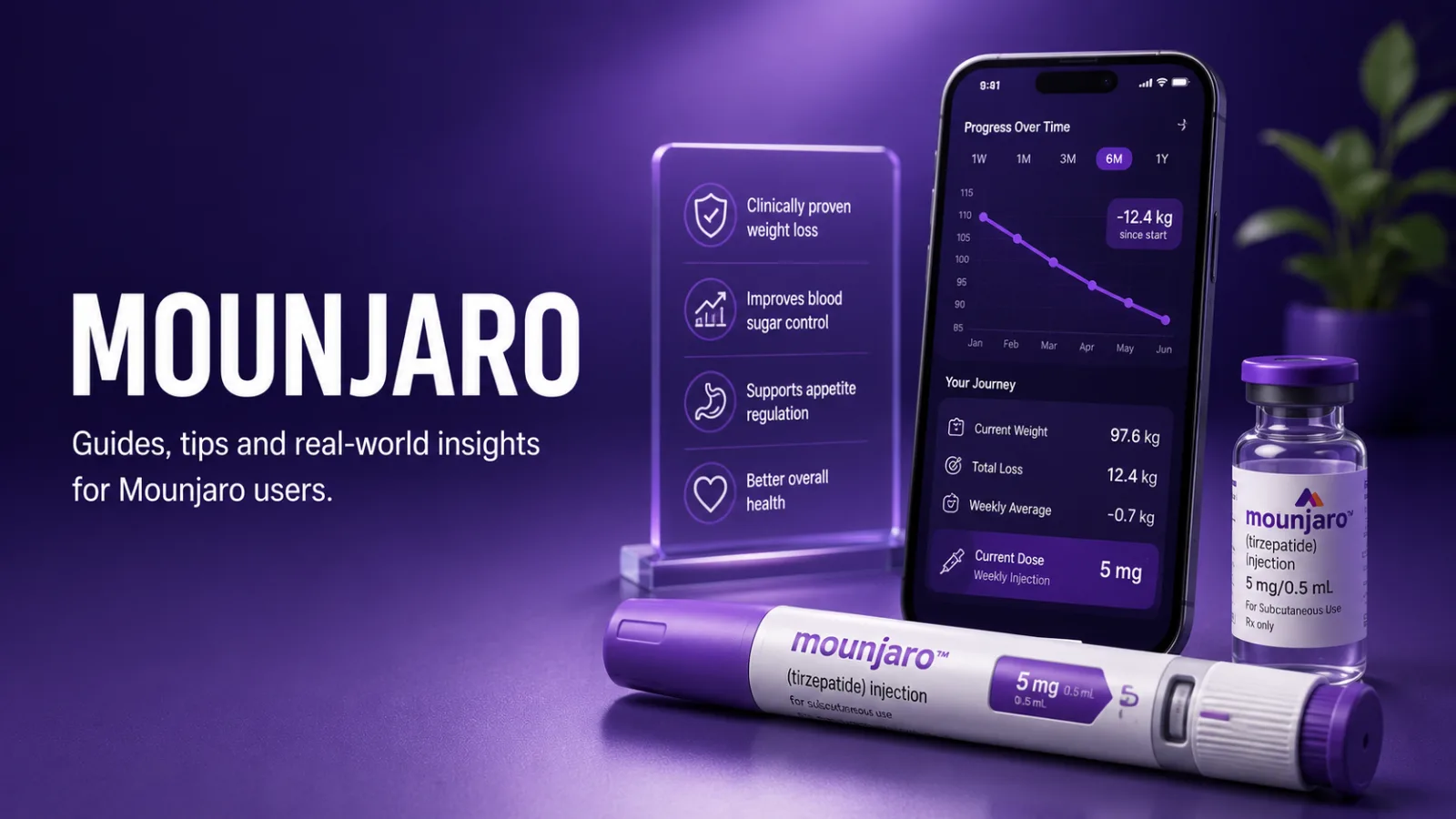
If you've been reading about weight-loss injections, you've probably seen Mounjaro and Ozempic mentioned in the same breath — sometimes as if they're the same thing. They're not. They're different molecules, they work in slightly different ways, and in the UK they're licensed for different jobs. There's also a lot of muddle about where Wegovy fits in, which makes the whole picture harder to read than it needs to be.
Let's clear it up properly. This is general information, not medical advice — which of these is right for you (if either) is a decision for a clinician who knows your history. But understanding how they really compare will help you ask better questions.
Two different drugs, not two brands of one drug
This is the part that trips most people up, so it's worth getting straight first.
Mounjaro is tirzepatide. It's a "dual agonist" — it acts on two gut-hormone receptors at once: GLP-1 and GIP. Both are hormones your body releases after eating that influence appetite, how full you feel, and how your body handles blood sugar.
Ozempic is semaglutide. Semaglutide acts on a single receptor, GLP-1. It's the same class of drug, and it overlaps heavily with tirzepatide in how it feels day to day, but it's pulling one lever rather than two.
So at the molecular level: tirzepatide (GLP-1 + GIP) versus semaglutide (GLP-1 only). Whether that second receptor is the reason tirzepatide tends to produce more weight loss in trials is still being worked out — GIP's exact role is genuinely debated — but the head-to-head data (more on that below) does favour tirzepatide. If you want the fuller picture of how these gut hormones actually drive appetite and fullness, we've written it up in how GLP-1 medications work.
The Ozempic and Wegovy confusion
Here's the bit that causes endless mix-ups. Ozempic and Wegovy are both semaglutide. Same active ingredient. They're different brands, with different licences and different maximum doses.
- Ozempic is licensed in the UK to treat type 2 diabetes.
- Wegovy is the semaglutide brand licensed for weight management.
So when someone says "Ozempic for weight loss", what's usually meant is semaglutide for weight loss — and the brand actually licensed for that purpose is Wegovy, which goes up to a higher dose (2.4 mg) than Ozempic does. Using Ozempic itself purely for weight loss is off-licence. We go into that distinction in full in Ozempic vs Wegovy — worth a read if the branding has ever confused you, because it confuses almost everyone.
For a fair comparison with Mounjaro, then, the honest framing is: tirzepatide versus semaglutide, keeping an eye on which dose and which licence we're talking about.
What each is licensed for in the UK
This matters more than it might seem, because licensing shapes who can get what, and how.
Mounjaro (tirzepatide) is licensed in the UK for both type 2 diabetes and weight management. That dual licence is part of why it's had so much attention — it's approved across both uses under one brand.
Ozempic (semaglutide) is licensed for type 2 diabetes only. It is not licensed as a weight-loss treatment in the UK, even though it produces weight loss.
Wegovy (semaglutide) is the brand licensed for weight management.
On the NHS, access is its own conversation. Mounjaro has begun rolling out through the NHS in England for weight management, with eligibility phased in over several years and tied to specific BMI and health criteria. Ozempic on the NHS is for type 2 diabetes. Wegovy access has been routed largely through specialist weight-management services. Eligibility and rollout details shift, so check current NHS guidance rather than relying on a blog post for the specifics.
How you take them
Good news here: they're broadly similar to live with. Both Mounjaro and Ozempic are once-weekly injections you give yourself under the skin — typically the abdomen, thigh or upper arm, rotating the site each time. Same day each week is the goal, with a bit of flexibility if you need to shift it.
Both are started low and titrated up gradually over weeks or months. This slow build-up isn't bureaucracy — it's how you give your gut time to adjust and keep the nausea manageable. Rushing the dose is one of the more common reasons people have a rough time. Our Mounjaro week-by-week guide walks through what a typical titration looks like.
What the head-to-head evidence actually says
This is where you have to be careful, because a lot of online comparisons stitch together numbers from separate trials and present them as a fair fight. Two trials genuinely did put the drugs head to head, and they're the ones worth leaning on.
SURPASS-2 — in type 2 diabetes
Published in the New England Journal of Medicine in 2021, SURPASS-2 compared tirzepatide (at 5 mg, 10 mg and 15 mg) against semaglutide 1 mg in nearly 1,900 adults with type 2 diabetes, all on metformin, over 40 weeks.
Tirzepatide came out ahead on both blood sugar and weight. At 15 mg, average weight loss was around 12.4 kg (about 27 lb, or 13.1% of body weight), versus roughly 6.2 kg (about 14 lb, 6.7%) on semaglutide 1 mg. A1C dropped about 2.46% on the top tirzepatide dose against about 1.86% on semaglutide. So in this setting, the dual agonist did more.
One honest caveat: this trial used semaglutide at 1 mg, which is a typical diabetes dose — not the higher 2.4 mg dose used for weight management. So SURPASS-2 tells us a lot about diabetes care, but it isn't the cleanest read on weight loss specifically.
SURMOUNT-5 — for obesity
That cleaner read came later. SURMOUNT-5, published in NEJM in 2025, was the first head-to-head trial of the two drugs for weight loss in adults with obesity who didn't have diabetes. Crucially, it titrated each drug to its maximum tolerated dose for weight management — tirzepatide up to 10 or 15 mg, semaglutide up to the full 2.4 mg. So this was a fairer fight: best against best.
Over 72 weeks, across 751 participants, average weight loss was about 20.2% on tirzepatide versus about 13.7% on semaglutide. Waist circumference fell more on tirzepatide too (around 18.4 cm versus 13.0 cm). Tirzepatide was statistically superior.
Tirzepatide vs semaglutide: at a glance
| Tirzepatide — Mounjaro | Semaglutide — Ozempic / Wegovy | |
|---|---|---|
| Receptors | GLP-1 + GIP (dual agonist) | GLP-1 only |
| Brands | Mounjaro | Ozempic (type 2 diabetes); Wegovy (weight management) |
| Maximum dose | 15 mg | 1 mg (Ozempic) / 2.4 mg (Wegovy) |
| SURPASS-2 — type 2 diabetes, 40 weeks (NEJM 2021) | ~12.4 kg (13.1%) at 15 mg | ~6.2 kg (6.7%) at 1 mg |
| SURMOUNT-5 — obesity, 72 weeks (NEJM 2025) | ~20.2% weight loss | ~13.7% weight loss |
| Waist circumference (SURMOUNT-5) | −18.4 cm | −13.0 cm |
| Common side effects | Mainly gastrointestinal (nausea, constipation, diarrhoea); worst at start and dose step-ups | Broadly similar |
Two things to hold onto. First, even the "lower" result here — roughly 14% on semaglutide — is a substantial amount of weight to lose with a medicine. This isn't tirzepatide working and semaglutide failing; it's both working, with one working somewhat harder on average. Second, these are averages. Individual responses vary enormously, and a population average doesn't predict what any one person will get.
Side effects: more alike than different
Because they're in the same broad family, the side-effect profiles look similar. The common ones are gastrointestinal — nausea, constipation, diarrhoea, sometimes vomiting — and they tend to be worst when you start or step up a dose, then ease off. In SURMOUNT-5, the rates of GI side effects were broadly comparable between the two drugs, and discontinuation due to side effects was low and similar in both arms.
That doesn't mean they feel identical for everyone. Some people tolerate one better than the other, and there's no reliable way to predict in advance which that'll be. There are also more serious but less common risks and specific contraindications for both — which is exactly why prescribing and monitoring sit with a clinician. We cover the day-to-day reality in Mounjaro side effects and offer practical coping strategies in managing GLP-1 side effects.
Cost and availability, kept general
Pricing and supply change constantly, so any specific figure would be out of date fast. In general terms: NHS access depends on which condition you're being treated for and whether you meet the current eligibility criteria, while private prescriptions cost more and vary between providers. Both drugs have also been affected by supply pressures at various points, given how rapidly demand has grown. For current prices and stock, check directly with the NHS, your GP, or a regulated pharmacy rather than trusting a number you saw online.
So which one is "better"?
On the trial averages, tirzepatide produces more weight loss than semaglutide, including in the fair head-to-head SURMOUNT-5 comparison. If raw average weight loss were the only thing that mattered, that would settle it.
But it isn't. The right choice depends on what you're treating (diabetes, weight, or both), what you tolerate, what's licensed and available to you, cost, your other health conditions, and a clinician's judgement about all of it together. Plenty of people do very well on semaglutide. "Better on average" and "better for you" are not the same sentence.
The genuinely honest answer is the boring one: the best medication is the one a qualified prescriber chooses with you, for your situation — not the one with the bigger headline number.
Frequently asked questions
Is Mounjaro the same as Ozempic?
No. Mounjaro is tirzepatide, which acts on two receptors (GLP-1 and GIP). Ozempic is semaglutide, which acts on one (GLP-1). They're in the same broad family and feel similar to use, but they're different drugs with different licences.
Why do people say Ozempic for weight loss when it's not licensed for that?
Because Ozempic and Wegovy are both semaglutide. Ozempic is the brand licensed for type 2 diabetes; Wegovy is the semaglutide brand licensed for weight management, at a higher dose. "Ozempic for weight loss" usually means semaglutide for weight loss, and the licensed product for that is Wegovy.
Does Mounjaro cause more weight loss than Ozempic?
In head-to-head trials, tirzepatide produced more average weight loss than semaglutide — about 20% versus 14% over 72 weeks in SURMOUNT-5, the obesity trial that used each drug at its weight-management dose. But these are averages; individual results vary widely, and both produced substantial loss.
Are the side effects different?
Broadly similar. Both mainly cause gut-related effects — nausea, constipation, diarrhoea — that are worst at the start and after dose increases. Some people tolerate one better than the other, but there's no way to predict which in advance.
Can I switch from one to the other?
Possibly, but that's a clinical decision — it involves dosing, timing and your individual response, and shouldn't be done on your own. Talk to the prescriber who's managing your treatment.
Where WeightLytic fits in
Whichever medication you and your clinician land on, the day-to-day still comes down to habits, food and tracking your trend over time. WeightLytic is an AI-powered weight-loss companion designed to sit alongside GLP-1 treatment — logging food, tracking your dose schedule, and showing your weight trend as a forecast with confidence ranges rather than empty promises. If that sounds useful, it is free on the App Store or Google Play.
Sources & references
- Frías JP et al., Tirzepatide versus Semaglutide Once Weekly in Patients with Type 2 Diabetes (SURPASS-2), New England Journal of Medicine, 2021
- Aronne LJ et al., Tirzepatide as Compared with Semaglutide for the Treatment of Obesity (SURMOUNT-5), New England Journal of Medicine, 2025
- American College of Cardiology, SURMOUNT-5 journal scan
- NHS, Tirzepatide (Mounjaro)
- NHS, Semaglutide (Ozempic, Wegovy, Rybelsus)
- Eli Lilly, SURPASS-2 results published in NEJM
Related articles
Track your weight loss with WeightLytic.
AI forecasting, GLP-1 companion, and protein tracking — all in one app. Free on iPhone and Android.